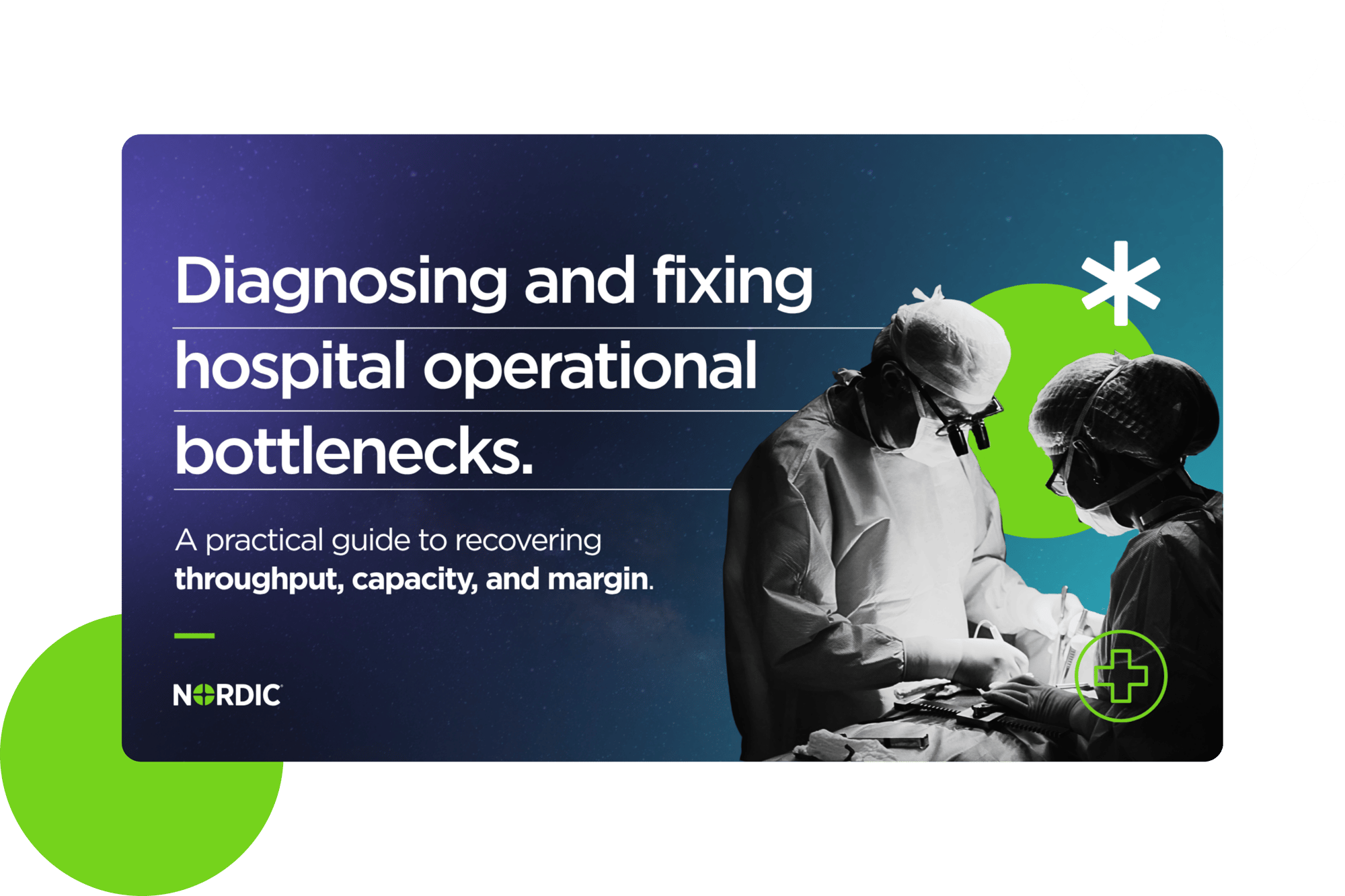
DIAGNOSTIC & PLAYBOOK
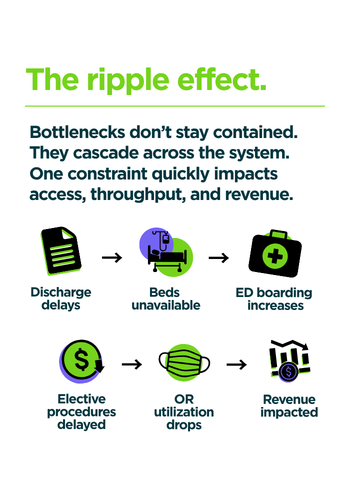
Bottlenecks limit your capacity.
When breakdowns across scheduling, staffing, and workflows add up, performance takes the hit.
Find what’s slowing you down and chart a clear path forward.
In just 5 questions and 2 minutes, get a personalized playbook to guide your next steps.

Where bottlenecks show up and how to move forward.
Complexity makes it hard to know where to focus. The Operational Performance Review gives you clarity and a path forward.
What you get:
- Insight: Identify where bottlenecks are holding you back
- Context: See how these issues show up across similar organizations
- Focus: Prioritize high-impact improvements
- Action: Take clear next steps aligned to your goals
Stop trying to solve everything at once. Focus on what matters most and start making measurable progress.
.png?hsLang=en)
Why healthcare organizations choose Nordic
As a healthcare-exclusive partner, Nordic helps organizations identify and resolve operational bottlenecks across clinical, financial, and enterprise workflows.
What sets Nordic apart:
- Deep healthcare expertise across hundreds of health systems
- End-to-end capabilities from assessment through optimization
- Cross-platform experience across EHRs, ERPs, and enterprise systems
- A workflow-driven approach that connects technology to outcomes
- Execution-focused delivery that drives measurable results
We don’t just recommend solutions. We work alongside your team to implement them so improvements are realized and sustained.